 Elphamatt
Order now:
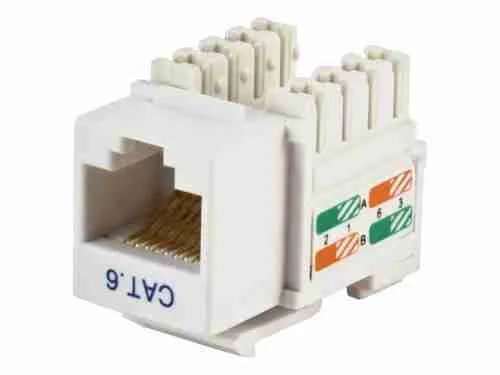
APKR Cat 6 modules are modular keystone jacks designed for structured Ethernet‑cabling systems. They allow you to terminate Cat 6 (and often backward‑compatible Cat 5e/5) cables inside wall plates, patch panels, surface boxes, or ancillary outlets. A typical listing in Kenya describes them as:
“APKR Cat6 Keystone Jack Modules … modular components used in structured cabling systems to terminate Cat6 Ethernet cables. … designed to fit into standard keystone wall plates, patch panels, or multimedia boxes.” Almiria Kenya+1
They are sold separately from face‑plates or patch panels. For example, an online Kenyan reseller notes:
“Flexible Installation – Install from either front or rear of the faceplate … Cat6 Cat5e Cat5 Compatible.” Informed Store
In short: you use an APKR Cat 6 module as the “inner jack” inside a keystone wall plate or patch panel to give you a Cat 6‑rated outlet.
Based on the product descriptions, here are some of the typical features you should see with these modules:
Cat 6 compatibility, often specifying support for data rates up to or beyond 1 Gbps and bandwidth up to 250 MHz or more. Almiria Kenya+1
Backward compatible with Cat 5e / Cat 5 cables, so you can upgrade docks/outlets without re‑cabling if the wiring is already Cat 6. Informed Store+1
Keystone form‑factor: they “snap into” standard keystone face plates, patch panels, surface boxes etc. For example: “Keystone wall plate / face plate / patch panel compatible.” Informed Store
Termination style: Many allow standard punch‑down termination (110 block or Krone style) or IDC style. Example: “Easy termination – Punch down with standard 110 termination tools.” Informed Store
Color‑coded wiring: Supports T568A and T568B wiring schemes with appropriate colour labels. Informed Store+1
Gold‑plated contacts and solid build: For example: “Gold plated contacts and easy snap‑in retaining clip ensure a secure and corrosion free connection.” Informed Store
Compatibility with face plates/patch panels: They integrate nicely into outlets and clean wall mount installations.
Offices or homes where you want to provide a Cat 6 rated Ethernet outlet (for a workstation, IP phone, network printer etc) — the module goes into the faceplate or box.
Structured cabling installations for data/voice systems (including IP phones, computers, network devices) where you want future compatibility.
Upgrades of existing network outlets: replace older jacks with Cat 6 keystones (modules) to improve performance or future‑proofing.
Patch panels where you might populate each port with a Cat 6 module for termination.
Environments where you want modular flexibility: e.g., face plates with mix of jacks (data, voice) using modules.
Improved performance: Using a Cat 6‑rated module ensures the outlet portion of the link supports higher frequency/bandwidth than older jacks, which helps maintain system performance especially if cables/support gear are good.
Flexibility & modularity: Because the module snaps into a keystone plate or panel, you can mix and match ports, types (data vs voice), or swap modules if damaged or for future upgrades.
Cost efficiency: The module approach allows upgrading just the termination point rather than replacing entire wall plates or wiring.
Clean installation: When used with a proper face plate or patch panel, the result is a professional, tidy outlet which is important in offices or structured cabling setups.
Backward compatibility: Most are designed to work with existing Cat5e/5 cables (although full performance will depend on entire link).
When selecting and installing APKR Cat 6 modules, consider the following:
Cable run & link performance: The module is only one component of the link. If your cable or patch panel is older category or poorly installed, you may not realize full Cat 6 benefits.
Termination quality: Ensure your installer uses correct punch‑down tools, follows the colour‑coding (T568A or B), maintains proper pair twists right up to the termination, avoids untwisting more than allowed, and maintains performance.
Standard compliance: Look for modules that meet relevant standards (ANSI/TIA‑568, ISO/IEC 11801). Some listing may not explicitly state full test data but say “designed to exceed Cat 6 specifications.” Almiria Kenya+1
Housing & contact quality: Gold‑plated contacts, good housing (durable plastic) help maintain signal and avoid corrosion or mechanical failures.
Face‑plate / panel compatibility: Ensure the module fits the face plate or panel you have — they should be Keystone “snap‑in” size, fit your local box or mounting style.
Shielding vs unshielded: If your cable run uses shielded twisted pair (STP) you’ll need a module compatible with shielding (and grounding) rather than just unshielded (UTP). The module listing may specify unshielded only (UTP) so check accordingly.
Future‑proofing considerations: While Cat 6 is good for gigabit and up to 10Gb over shorter distances, if you expect multi‑gig (2.5G/5G) or full 10Gb over 100 m, you might consider Cat 6A modules and cabling instead. For example, some forum discussions say:
“On any new or re‑cabining projects we use CAT6 or better… if you ever want multigig (2.5Gb, 5Gb) go Cat6 at a minimum. If you think you want 10Gb definitely go 6A.” Reddit
Labelling & identification: Some modules or plates include colour icons or label fields for identification; this helps in management of structured cabling. For example: “Quick Identification – Colored Icons provided for port identification.” Informed Store
Price and sourcing: In Nairobi, one listing shows APKR Cat 6 modules at ~ KSh 240 (ex VAT). Almiria Kenya+1
Warranty and brand reliability: If you’re doing a larger deployment (office, campus) check warranty, supplier support and consistency of the brand.